Thinning hair changes the rules for wig shopping. A style that looks great on a full head of hair can feel bulky, slide around, or sit unnaturally when there’s less hair underneath to anchor it. The good news: there are wigs built specifically with these challenges in mind, and once you know what to look for in wigs for thinning hair, finding the right one gets a lot easier.
When searching for wigs for thinning hair, it’s essential to consider how they will blend with your natural look.
Many users have found that wigs for thinning hair in women provide newfound confidence and style flexibility.
There are various styles and options available for wigs for thinning hair, catering to different preferences.
This guide covers everything that matters, from cap construction and hair density to synthetic versus human hair, so you can shop with confidence and find a wig that looks like yours, especially if you are considering wigs for thinning hair.
Choosing the right wigs for thinning hair can significantly improve your overall appearance and comfort.
Choosing the Best Wigs for Thinning Hair
The short answer: For thinning hair, look for a lightweight wig with a lace front or monofilament top, low to medium density, and a secure but gentle cap. These features create a natural hairline, reduce scalp pressure, and stay put without gripping too tight, making them ideal wigs for thinning hair.
Why Thinning Hair Requires a Different Kind of Wig
Most wig guides focus on style, color, and length. Those details matter, but for someone with thinning hair, they come second. The features that determine whether a wig looks natural and feels comfortable day after day are less visible, and often overlooked.
Here is why standard wig advice does not always apply:
Wigs for thinning hair often feature lighter construction for added comfort throughout the day.
Flexible parting options are essential in wigs for thinning hair to create a realistic appearance.
- Less natural hair means less grip. Without a full head of hair to help hold a wig in place, fit and cap design become more important. A poorly fitting cap will shift, especially around the hairline.
- A sensitive scalp needs breathable materials. Hair thinning from age, hormones, or medical treatment can leave the scalp more tender. Heavy, wefted caps trap heat and can cause irritation.
- High density looks unnatural. Thick, voluminous wigs create a noticeable contrast against a thinning hairline or visible scalp at the part. Lower density looks more proportional and realistic.
- The part matters more. When your own hair is thinning, a wig with a stiff or obvious part draws attention to the transition. A hand-tied or monofilament top allows for flexible parting that mimics a real scalp.
Key takeaway: The best wig for thinning hair is not necessarily the most expensive or the most natural-looking in isolation. It is the one that accounts for fit, weight, density, and scalp comfort together.
For those with thinning hair, investing in quality wigs for thinning hair can change your daily routine.
Understanding the features of wigs for thinning hair can help you make a more informed purchasing decision.
Cap construction is paramount when selecting wigs for thinning hair, as it affects both fit and appearance.
Cap Construction: The Most Important Feature to Understand
Choosing wigs for thinning hair with a lace front can enhance the natural look at the hairline.
Monofilament tops in wigs for thinning hair add to the illusion of a natural scalp.
The cap is the foundation of the wig. It determines how the wig sits on your head, how natural the scalp looks, and how comfortable it feels after hours of wear. For thinning hair, this is the single most important factor to evaluate before anything else.
For ultimate comfort, consider wigs for thinning hair that are fully hand-tied.
Open cap constructions in wigs for thinning hair allow for better airflow during wear.
The right wigs for thinning hair will allow for natural movement and a comfortable fit.
Lace front wigs have a sheer lace panel along the hairline, usually from ear to ear. The hair in this section is individually hand-tied into the lace, which creates the appearance of hair growing directly from the scalp. This is especially valuable for thinning hair because it eliminates the hard, obvious edge that standard caps create at the forehead.
Lace front wigs are available in both synthetic and human hair versions, and they tend to be more affordable than fully hand-tied styles while still delivering a natural-looking hairline.
Always consider your lifestyle when choosing wigs for thinning hair, as it greatly impacts your satisfaction.
A monofilament top is a thin, breathable mesh panel at the crown where each hair strand is individually sewn in. This construction allows the hair to move in multiple directions and creates the illusion of a real scalp at the part. For anyone dealing with thinning at the crown or a visible part, a monofilament top is one of the most effective solutions available.
Many wigs combine a lace front with a monofilament top, giving you a natural hairline and a flexible, realistic-looking part in one cap.
Fully hand-tied wigs are the most natural-feeling option because every single hair strand is knotted individually into a soft mesh base. This creates maximum movement and the lightest possible feel against the scalp. They tend to cost more than machine-wefted styles, but for daily wear with a sensitive scalp, the comfort difference is significant.
Open Cap / Wefted Caps
Open cap or wefted constructions use rows of hair sewn onto horizontal strips. They are lighter in weight and allow more airflow than closed caps, making them a comfortable warm-weather option. However, they do not offer the same realistic scalp appearance as lace or monofilament styles, and the wefts can be visible if the hair parts in the wrong direction.
Cap Construction at a Glance
| Cap Type | Natural Scalp Look | Breathability | Best For |
| Lace Front | Excellent at hairline | Good | Natural hairline, everyday wear |
| Monofilament Top | Excellent at crown/part | Good | Crown thinning, flexible parting |
| Full Hand-Tied | Excellent overall | Very good | Sensitive scalp, daily comfort |
| Open/Wefted Cap | Limited | Excellent | Warm weather, budget-friendly |
Synthetic vs. Human Hair: Which Is Right for You?
This is one of the most common questions for first-time wig buyers, and the honest answer is that it depends on how you plan to use the wig and how much maintenance you want to do.
Synthetic Wigs
Synthetic wigs are made from manufactured fibers that are pre-styled and hold their shape wash after wash. For thinning hair, they offer several practical advantages:
- Low maintenance. The style bounces back after washing without any heat styling.
- Affordable. Synthetic wigs typically cost significantly less than comparable human hair styles, which makes it easier to own more than one.
- Consistent look. Because the style is built in, you do not need to restyle after every wash.
- Lightweight options available. Many synthetic brands now offer ultra-light caps under two ounces, which reduces scalp pressure considerably.
The main limitation is heat. Standard synthetic fibers cannot be styled with flat irons or curling wands. Heat-friendly synthetic wigs are available and can handle low heat settings, but they still do not offer the same flexibility as human hair.
Best for: First-time wig wearers, everyday wear, budget-conscious shoppers, and anyone who wants a low-maintenance routine.
Human Hair Wigs
Human hair wigs look and feel the most natural, and they can be washed, blow-dried, and heat-styled just like your own hair. For women who want maximum versatility, they are worth the investment.
That said, there are real trade-offs:
Overall, wigs for thinning hair should be a fun and enjoyable aspect of your personal style.
- Higher cost. Quality human hair wigs are a significant investment, and not all human hair is equal. Remy hair, where the cuticles are aligned in the same direction, tends to last longer and tangle less than non-Remy options.
- More upkeep. Without the built-in style of a synthetic wig, human hair requires regular washing, conditioning, and restyling.
- Heavier. Human hair wigs can be heavier than lightweight synthetics, which matters for all-day comfort on a sensitive scalp.
Best for: Women who want styling flexibility, a highly natural look, and are comfortable with a more involved care routine.
Quick rule of thumb: Start with a quality synthetic wig if you are new to wigs. It is lower risk, easier to care for, and gives you time to figure out what styles and fits work best before committing to a larger investment.
7 Wig Styles Worth Considering for Thinning Hair
These picks cover a range of lengths, budgets, and wear styles, all selected with thinning hair in mind. Each one prioritizes either cap construction, weight, or density in a way that makes a real difference in how the wig looks and feels.
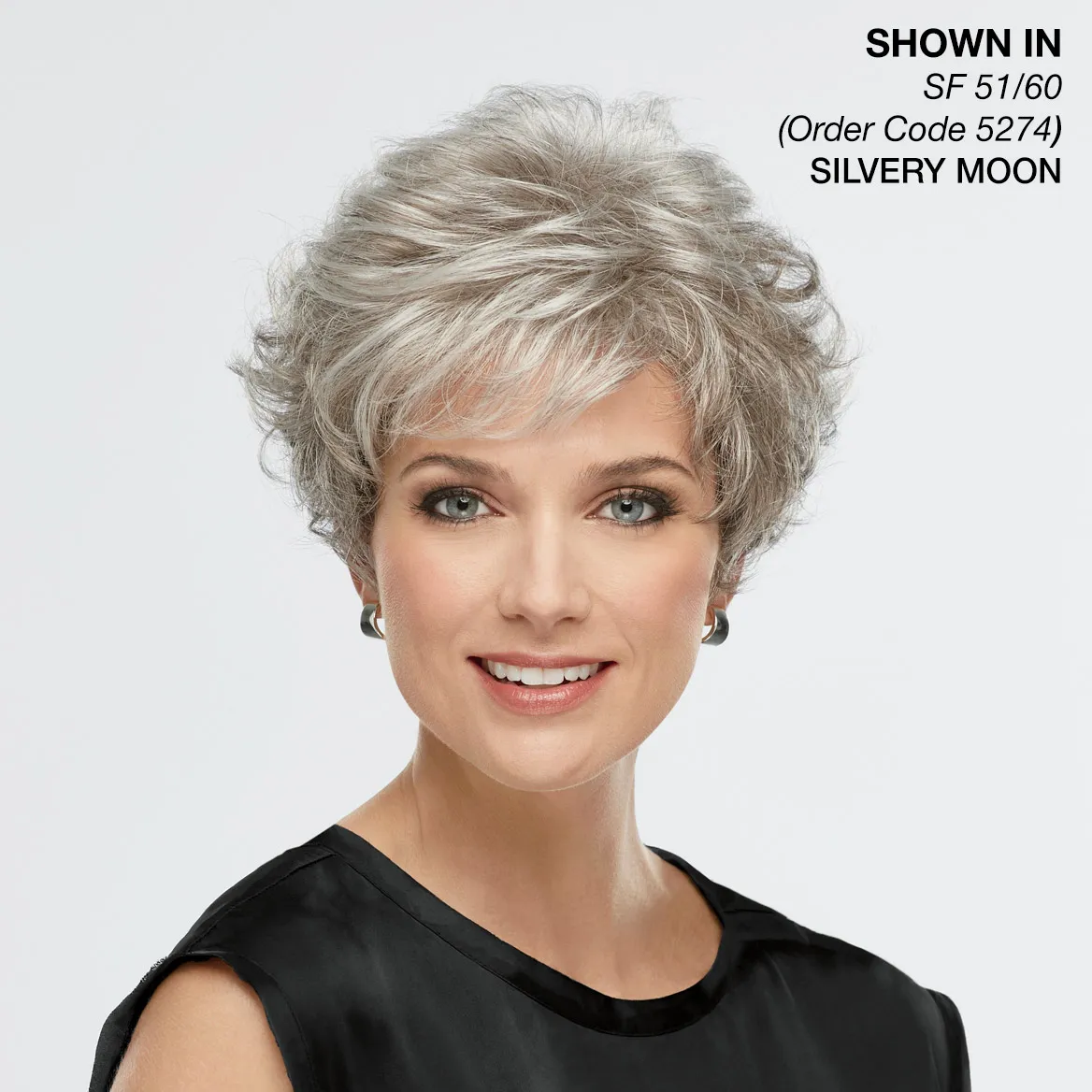
1. Short Pixie or Cropped Style
Short wigs are one of the smartest choices for thinning hair. Less hair means less weight on the scalp, a more proportional density, and a style that is easy to manage every day. A cropped synthetic wig with a lace front gives you a clean, natural hairline without the bulk of longer styles. Look for options under two ounces for all-day comfort.
Look for: Lace front cap, low density, under 2 oz weight.
2. Layered Bob with Lace Front
A classic layered bob sits at or just below the chin and works well for a wide range of face shapes. When paired with a lace front cap, the hairline looks natural and the layers add movement without adding excessive volume. This is one of the most versatile everyday styles available in both synthetic and human hair.

Look for: Lace front, medium length, light to medium density.
3. Monofilament Top with Natural Part
If crown thinning or a visible part is your main concern, prioritize a monofilament top above everything else. The individual hand-tied hairs in the crown area move freely and the mesh base creates the appearance of a real scalp. This style works in any length and is available from most major wig brands.
Look for: Monofilament top, flexible parting, any length.
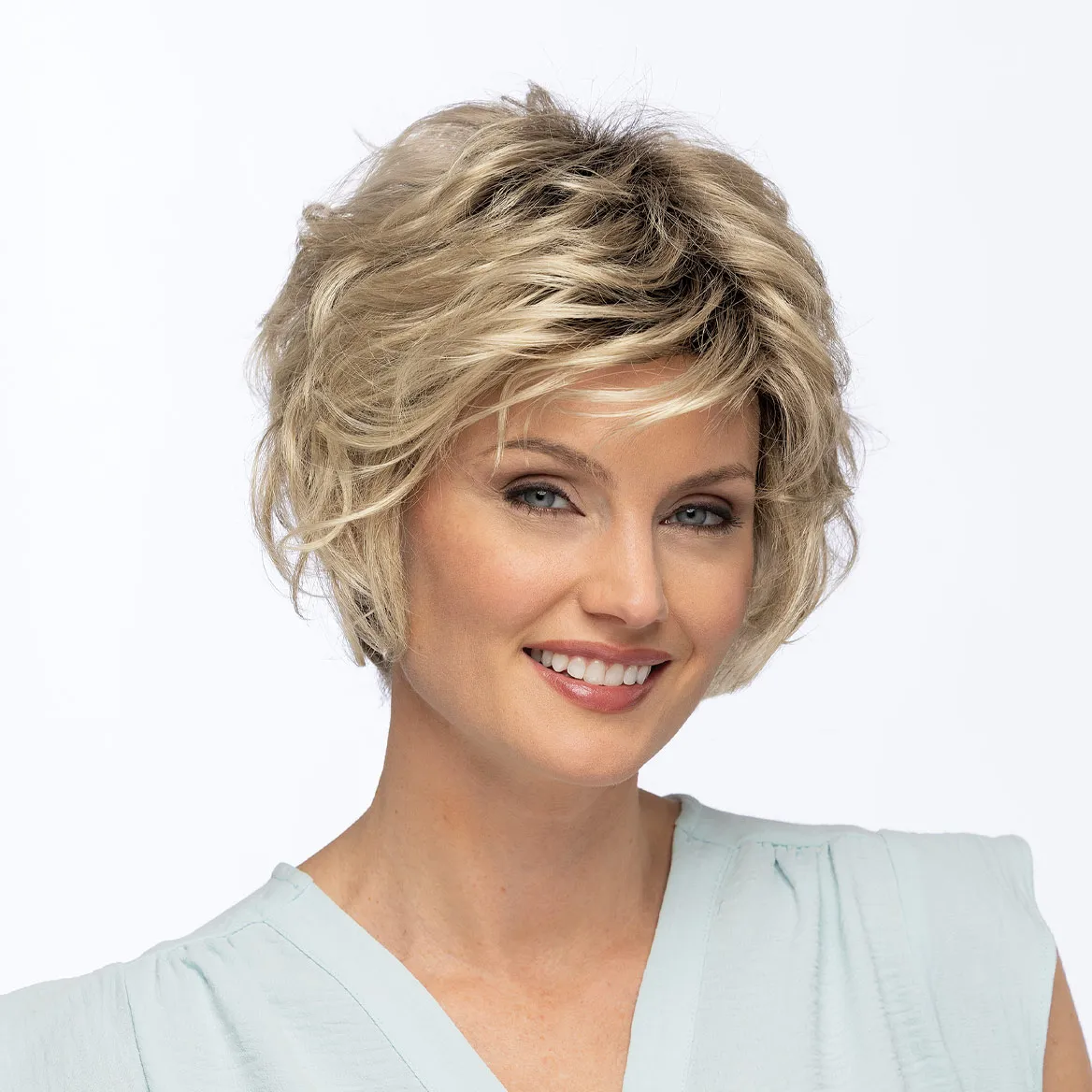
4. Lightweight Wavy Mid-Length
A mid-length wavy style adds softness and dimension without requiring a lot of density to look full. The wave pattern creates visual volume so the wig does not need as much hair to look natural. Opt for a hand-tied or lace front cap in this length for the best movement and comfort.
Look for: Hand-tied or lace front cap, low to medium density, natural wave.
5. Glueless Synthetic with Ear Tabs
Glueless wigs are secured with adjustable straps and ear tabs rather than adhesive, making them one of the most comfortable and practical options for everyday wear. The ear tabs sit softly against the skin and keep the wig in place without any products. This is an especially good choice if scalp sensitivity is a concern or if you want something easy to put on and take off.
Finding the right fit is essential in wigs for thinning hair, as comfort is key.
Look for: Adjustable strap, ear tabs, lightweight cap.
For those with thinning hair, wigs for thinning hair can provide a low-maintenance solution.
6. Open-Cap Style for Warm Weather
For summer months or anyone who runs warm, an open-cap or wefted wig allows significantly more airflow than a closed cap. These styles tend to be lighter and less expensive. The trade-off is a less realistic part, but for casual everyday wear where you are not parting the hair, this is rarely an issue.
Look for: Open weft construction, lightweight, breathable.
7. Petite Cap Fit
Cap sizing is often overlooked, but it matters more for thinning hair than for any other situation. A cap that is too large will shift and slide, especially without a full head of hair to help anchor it. Many wig brands offer petite, average, and large cap sizes. If you are between sizes or have a smaller head, a petite cap will give you a more secure, natural-looking fit.
Look for: Petite or adjustable cap size, secure fit without tension.
What to Look for When Shopping: A Quick Checklist
Before adding a wig to your cart, run through these key criteria. They apply whether you are shopping online or in a store.
Cap and Fit
Make sure to feel confident in your choice of wigs for thinning hair, as it will reflect in your style.
- Does the cap size match your head measurements? (Measure around the perimeter of your head just above the ears and across the forehead.)
- Does the cap have adjustable straps or ear tabs for a secure fit without adhesive?
- Is the cap construction appropriate for your main concern: lace front for hairline, monofilament for part, hand-tied for overall comfort?
Weight and Density
- Is the wig described as lightweight or low density? For thinning hair, avoid anything marketed as “extra full” or “high volume.”
- Does the weight feel manageable for the hours you plan to wear it?
Hair Type
- Synthetic or human hair? If this is your first wig, synthetic is the lower-risk starting point.
- If synthetic, is it heat-friendly? (Only matters if you want to use hot tools.)
- If human hair, is it Remy grade? This affects longevity and how the hair behaves over time.
Style and Color
- Does the length and style suit your face shape and lifestyle?
- Is the color close to your natural shade, or are you open to a change? Staying close to your natural color makes the transition easier at the hairline.
One more thing: If possible, read reviews from buyers who specifically mention thinning hair or hair loss. Their feedback on fit, comfort, and natural appearance will be more relevant than general reviews.
Wigs vs. Toppers: Which One Do You Actually Need?
Explore the world of wigs for thinning hair to find what works best for you.
If you still have a significant amount of your own hair, a topper (also called a hair topper or wiglet) may be a better option than a full wig. Understanding the difference can save you a lot of time and money.
With these tips in mind, finding the right wigs for thinning hair will be an easier process.
| Full Wig | Hair Topper | |
| Coverage | Full head | Crown, part, or top only |
| Best for | Moderate to advanced thinning or hair loss | Early to moderate thinning at the crown or part |
| Attachment | Adjustable cap, ear tabs, or adhesive | Clips into existing hair |
| Natural blend | Relies entirely on the wig’s hairline | Blends with your own hair at the sides and back |
| Ease of use | Easy to put on and remove | Requires some existing hair to clip into |
Choose a full wig if:
- Thinning is widespread across the scalp
- Hair loss is advanced enough that there is not enough natural hair to blend a topper
- You want a complete, consistent look without worrying about blending
Choose a topper if:
Lastly, don’t hesitate to experiment with different wigs for thinning hair to find your favorite.
Explore various wigs for thinning hair to match your personal style and needs.
- Thinning is concentrated at the crown, top, or part line
- You have enough hair at the sides and back to create a natural blend
- You want a lighter, less involved solution for partial coverage
For many women, starting with a topper and transitioning to a full wig as thinning progresses is a practical approach that keeps costs manageable at each stage.
Tips for Making Any Wig Look More Natural
Even the best wig needs a few finishing touches to look its most natural. These small adjustments make a noticeable difference.
- Get the right cap size. A wig that fits well looks natural automatically. One that is too loose will shift and create an obvious gap at the hairline. Measure your head before buying and size down if you are between sizes.
- Trim the lace carefully. If your wig has a lace front, trim the excess lace close to the hairline with small scissors before wearing. Leaving too much lace creates a visible border at the forehead.
- Choose a color that matches your brows. The hair closest to your face should complement your eyebrow color. A wig that is dramatically lighter or darker than your brows can look disconnected.
- Use a wig grip or band. A thin velvet wig grip worn under the cap adds friction and keeps the wig in place without adhesive or tight adjustments. This is especially helpful when there is less natural hair underneath.
- Style the front to match your natural part. If you typically part your hair on the left, choose a wig that allows for a left part. Wearing a wig against your natural part direction draws attention to the transition.
- Blend with your own hairline. If you have any natural hair at the temples or nape, let a few strands peek out naturally at the edges. This softens the line between your hair and the wig.
Browse health and beauty products and hair care essentials at Paula Young for everyday tools and accessories to complement your routine.
The Bottom Line
Finding the right wig for thinning hair comes down to three things: a cap that fits securely and looks natural, a density that does not overwhelm your existing hairline, and a hair type that suits your lifestyle and maintenance preferences.
Start with a lace front or monofilament cap in a lightweight synthetic style. Get your measurements right. Choose a color close to your natural shade. From there, the style details, length, texture, and wave, are yours to explore.
The wig that works best is the one you feel confident wearing every day. That confidence comes from fit and comfort first, everything else second.
For more everyday beauty and personal care finds, visit the Paula Young.